When Captain Kirk Touches the Stars, Does Humanity Look Away From Earth’s Scars?
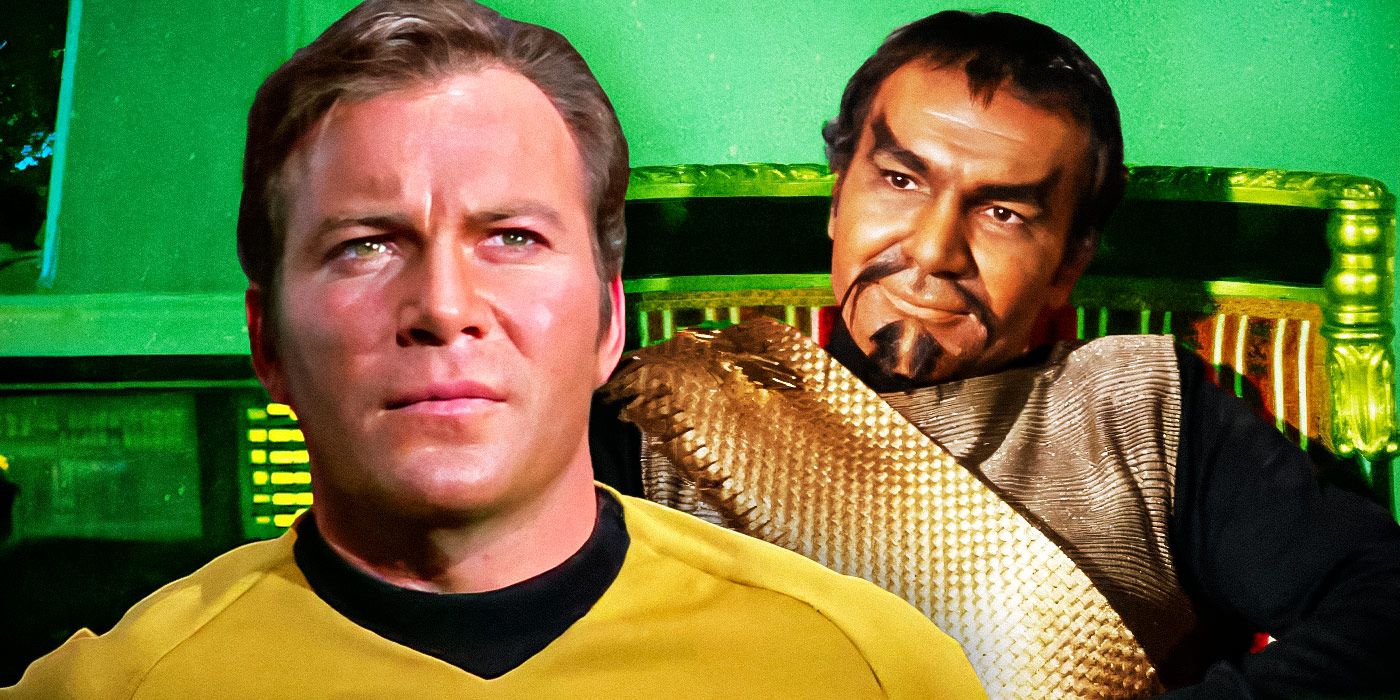
Ninety years old, a legend, a living embodiment of humanity’s yearning for the stars, William Shatner rocketed into space aboard Jeff Bezos’ Blue Origin capsule. For a fleeting eleven minutes, the man who famously captained the USS Enterprise through countless fictional galaxies experienced the real thing. He saw the curvature of the Earth, the blackness of space, the thin blue line of our atmosphere. His emotional reaction upon landing was raw, profound, and deeply human: "Everybody in the world needs to see this… what you see is black and what you see is blue, and what you see is an emotion… It was so moving to me." He cried. He spoke of the fragility of life, the preciousness of our planet.
But as the champagne corks popped and the headlines celebrated this unprecedented journey of an elder statesman to the final frontier, a question lingered, sharp and disquieting, in the collective consciousness: What exactly are we celebrating? Is Shatner’s brief, awe-inspiring trip a triumph of human spirit and ingenuity, a testament to enduring dreams of exploration? Or does it, perhaps, serve as a stark, glittering distraction, an almost theatrical performance that allows us to avert our gaze from the very real, very urgent scars festering on the planet he so eloquently described as fragile?
Don’t get us wrong. There’s an undeniable romance in seeing a cultural icon, whose career was built on exploring the cosmos, actually go there. For generations, William Shatner, as Captain James T. Kirk, embodied a bold, optimistic vision of humanity’s future. Star Trek, in its purest form, wasn’t just about phasers and warp drives; it was a hopeful blueprint. It showed a future where humanity had largely overcome its terrestrial squabbles, where poverty was eradicated, where diversity was celebrated, and where the collective effort was directed towards scientific discovery and peaceful exploration. The United Federation of Planets, with its Prime Directive, represented an ethical framework for engaging with the unknown. It painted a picture of a species that had earned its place among the stars by first putting its own house in order.
Yet, Shatner’s real-life voyage didn’t happen in that utopian future. It happened today. It happened in a world grappling with unprecedented climate catastrophe, where record-breaking heatwaves scorch continents, where rising sea levels threaten coastal communities, and where biodiversity is vanishing at an alarming rate. It happened in a world where economic inequality isn’t just a gap, but a chasm, with billions struggling for basic necessities while a handful of individuals command wealth beyond comprehension. It happened in a world where geopolitical tensions simmer, where conflicts displace millions, and where the very fabric of democratic societies feels increasingly frayed. So, when we cheer for Captain Kirk’s journey into orbit, can we truly separate that celebration from the context of its happening?
The commercial space race, spearheaded by billionaires like Jeff Bezos and Elon Musk, isn’t the Federation’s starfleet. It’s a venture driven by private capital, by ambition, and yes, by a very human desire to push boundaries. But whose boundaries are being pushed, and at what cost? Blue Origin, Bezos’s company, is a prime example. While it champions the vision of "millions of people living and working in space," the immediate reality is a tourism venture for the ultra-rich. A ticket on a suborbital flight reportedly costs hundreds of thousands, if not millions, of dollars. Shatner, a guest, flew for free, but his presence lends an invaluable sheen of legitimacy and aspiration to an enterprise fundamentally rooted in privilege.
Think about it: in a year where a significant portion of the global population struggled with the economic fallout of a pandemic, where food insecurity worsened, and where access to healthcare remained a luxury for many, some of the world’s wealthiest individuals are pouring billions into rockets and space hotels. Is this truly the most pressing application of human ingenuity and capital right now? Can we, as a society, genuinely reconcile the image of a nonagenarian actor marveling at Earth from above with the image of children starving on that same planet below? It’s not just a cognitive dissonance; it’s a moral one.
Some argue that these ventures are necessary for progress, that they push technological boundaries which eventually benefit everyone. They’ll point to spin-off technologies, to the inspiration these missions provide for future generations of scientists and engineers. And there’s a kernel of truth to that. Innovation often has unintended, positive consequences. But we must ask: Is this the most efficient or most ethical way to foster that innovation? If the primary driver is profit and prestige for a select few, how much of that benefit actually trickles down, and how quickly? Or is it more akin to a modern-day pyramid scheme, where the vast majority are left behind while the apex enjoys an increasingly spectacular view?
Let’s dig deeper into the environmental implications. Rocket launches, while not the largest contributors to global emissions compared to, say, the entire aviation industry, are far from benign. They release significant amounts of greenhouse gases and ozone-depleting substances into the upper atmosphere. As the commercial space industry scales up, with hundreds, if not thousands, of launches planned annually for satellite constellations and space tourism, the cumulative impact could become substantial. Can we, in good conscience, champion space exploration as humanity’s next great step while simultaneously accelerating the degradation of our home planet? Is the promise of a multi-planetary future merely an elaborate, incredibly expensive escape hatch for the privileged few, rather than a genuine solution for the collective?
And what about the concept of "exploration" itself? Star Trek’s mantra was "to boldly go where no one has gone before," usually implying discovery for the betterment of all. But today’s commercial space race often feels more like a land grab, or perhaps a sky grab, for resources, for orbital real estate, for bragging rights. We’re witnessing the nascent stages of a new frontier that risks replicating the very colonial patterns that have plagued Earth’s history. Who will set the rules? Who will benefit from lunar resources or asteroid mining? Will the benefits be equitably distributed, or will they simply consolidate power and wealth in the hands of those already at the top? When Bezos talks about moving "heavy industry" into space to preserve Earth, it sounds noble. But who decides what "heavy industry" moves, and who bears the cost, both economic and environmental, of getting it there?
Shatner’s personal experience, his tears, his profound sense of awe, are undeniable and moving. They remind us of our shared humanity, our capacity for wonder, and the powerful perspective that seeing our planet from afar can bring. This "overview effect," as it’s known, has transformed many astronauts, instilling in them a deep sense of responsibility for Earth. But for those of us on the ground, struggling with the day-to-day realities of a world in crisis, does that profound individual experience translate into collective action? Or does it merely become another spectacle, another fleeting moment of inspiration that quickly fades into the background noise of our troubled times?
We need to consider the broader narrative we’re crafting. When we elevate space tourism for billionaires as a pinnacle of human achievement while neglecting the urgent needs of billions on Earth, what message are we sending? Are we suggesting that the future lies out there, rather than right here? Are we inadvertently legitimizing a trajectory where the solution to Earth’s problems is to abandon it, or at least to build an exclusive escape route, rather than to diligently, painstakingly, and equitably fix what we’ve broken?
Imagine, for a moment, if the billions of dollars currently being funneled into private space ventures were instead redirected. What if that capital, that engineering talent, that innovative drive, were focused squarely on developing sustainable energy solutions, on building resilient infrastructure for climate-vulnerable communities, on eradicating treatable diseases, on ensuring universal access to education and clean water? What if the "boldly go" spirit was applied to solving our most intractable Earth-bound problems with the same fervor and financial backing? Would that not be an even more profound testament to humanity’s potential?
This isn’t to say space exploration is inherently bad, or that we should abandon all dreams of reaching for the stars. Far from it. A truly ethical, collective space endeavor, driven by international cooperation, scientific curiosity, and a commitment to equitable benefit, could indeed be a powerful force for good. It could unite humanity, inspire generations, and provide critical insights into our place in the universe. But that’s a very different vision from the one currently taking shape, dominated by private interests and unprecedented wealth.
As William Shatner, the fictional Captain Kirk, once said, "The more we learn, the more we realize how little we know." Perhaps his real-life journey, and the conversation it sparks, can serve as a potent catalyst for learning more about ourselves, our priorities, and the kind of future we truly want to build. Not just for a select few, but for all of humanity.
So, when we look at the images of Captain Kirk, gazing out at our fragile blue marble, let’s not just feel awe. Let’s also feel unsettled. Let’s ask ourselves: Are we truly looking at the Earth with the same urgency and care that Shatner’s tears suggested? Or are we, in our fascination with the stars, allowing the very real, very pressing scars on our home planet to deepen, unnoticed and unaddressed, until it’s too late to heal them? The silence we keep on these questions isn’t just an absence of sound; it’s a form of consent. And that, perhaps, is the most terrifying final frontier of all.