The Great Data Migration: How Edge Computing is Saving Our Planet (One Pixel at a Time)
The Existential Crisis of a Smart Toaster
Let me tell you a story. It was a Tuesday, roughly 3 AM, and I was deep in the throes of a particularly vivid dream involving a flock of sentient garden gnomes demanding artisanal sourdough. Suddenly, my phone buzzed. And then again. And again. I groggily reached for it, expecting an urgent message from a friend, perhaps a late-night epiphany about the meaning of life.
Instead, it was my smart toaster.
Yes, you read that right. My toaster, a sleek, stainless-steel contraption I’d bought on a whim during a particularly enthusiastic Black Friday sale, was having an existential crisis. Its message log, delivered via a rather dramatic push notification, read: "ERROR 404: Optimal Browning Algorithm Disrupted. Seeking Cloud Recalibration. Latency Critical. Toast Integrity at Risk." Followed by a frantic string of emojis depicting burnt bread and tiny, digital tears.
Now, I know what you’re thinking. “A smart toaster? Really?” But bear with me. This seemingly absurd scenario, while perhaps a slight exaggeration (my toaster is, thankfully, still blissfully analog), isn’t as far-fetched as it sounds. We live in a world where everything, from our fridges to our fitness trackers, our doorbells to our dishwashers, is becoming "smart." Each of these devices, in its own humble way, is constantly generating, sending, and receiving data. My hypothetical toaster wasn’t just toasting; it was analyzing bread type, ambient humidity, user preferences, and God knows what else, all to deliver that perfect, golden-brown slice. And all that data, all that algorithmic processing, traditionally had to travel. Far. To a massive, often distant, data centre.
Imagine this journey: from my kitchen counter, across my Wi-Fi, through my router, out into the vast internet, zipping across fibre optic cables, perhaps even bouncing off a satellite, only to land in a colossal server farm hundreds or thousands of miles away. There, amidst rows and rows of humming machines, my toaster’s data would wait its turn, get processed, and then begin the long journey back. All for a piece of toast. And all of this, my friends, comes at a cost. A significant, planet-sized cost.
Welcome to the Data Deluge: Our Digital Footprint’s Energy Habit
Our world is drowning in data. It’s not just your smart toaster’s existential dread; it’s the 4K Netflix stream you binge-watched last night, the countless selfies uploaded to Instagram, the endless TikTok scrolls, the Zoom calls that have become the new normal, the autonomous vehicles silently mapping their surroundings, and the AI models learning to paint masterpieces or diagnose diseases. Every click, every swipe, every sensor reading contributes to a digital tsunami that shows no sign of receding.
To put it in perspective, according to a report by Statista, the total amount of data created, captured, copied, and consumed globally reached a staggering 64.2 zettabytes in 2020 and is projected to exceed 180 zettabytes by 2025. A zettabyte, for those keeping score at home, is a trillion gigabytes. That’s enough digital information to make even the most seasoned librarian spontaneously combust.
And where does all this data live? Where is it processed, stored, and retrieved? In the colossal, often anonymous, temples of the digital age: data centres. These aren’t just glorified server rooms; they are sprawling industrial complexes, often the size of several football fields, packed to the rafters with powerful computers, networking gear, and storage devices. They are the beating heart of our digital world, the invisible infrastructure that makes everything from online banking to interstellar research possible.

But these digital behemoths have a dirty secret: they are incredibly energy-hungry. And I mean hungry in the way a teenage boy is hungry after a growth spurt – insatiable. A 2021 study published in Science journal highlighted that data centres already account for roughly 1% of global electricity demand, a figure that is projected to rise significantly as our data consumption continues its exponential climb. To power these facilities, and more critically, to cool them (those servers generate an enormous amount of heat, enough to fry an egg on, probably), requires vast amounts of electricity. And a significant portion of that electricity still comes from fossil fuels, contributing directly to greenhouse gas emissions and accelerating climate change. It’s a paradox: our quest for a smarter, more connected world is inadvertently making our planet hotter.
This is where our story takes a crucial turn. We can’t simply unplug the internet (though some days, after dealing with a particularly stubborn Wi-Fi issue, the thought is tempting). We need solutions. We need to find ways for our digital infrastructure to be not just powerful and fast, but also sustainable. And this, my friends, is where the unsung hero of our tale steps onto the stage: edge computing solutions for energy-efficient data centres.
The Edge: Bringing the Brain Closer to the Brawn
So, what exactly is edge computing? Imagine our traditional data centre model as a super-centralized, mega-brain, located far away in a secure, climate-controlled bunker. Every thought, every impulse, every piece of sensory input from your body (your smart devices, in this analogy) has to travel all the way to this distant brain for processing, and then the instructions travel all the way back. This is great for complex, heavy-duty thinking, like crunching numbers for a global financial institution or training a new AI model with petabytes of data. But for quick reflexes, for instantaneous reactions, for the mundane yet critical tasks like telling your smart toaster right now that the bread is about to burn, that long round trip is inefficient and, as we’ve established, energy-intensive.
Edge computing, simply put, is about moving that processing power, that "brain" functionality, closer to where the data is actually generated – to the "edge" of the network. Think of it like this: instead of sending every single sensation from your fingertips, toes, and eyelids all the way to your brain for analysis, your spinal cord and local nerve clusters handle a lot of the immediate, reflex actions. If you touch something hot, your hand recoils before your brain has even fully registered the pain. That’s your nervous system’s "edge computing" in action.
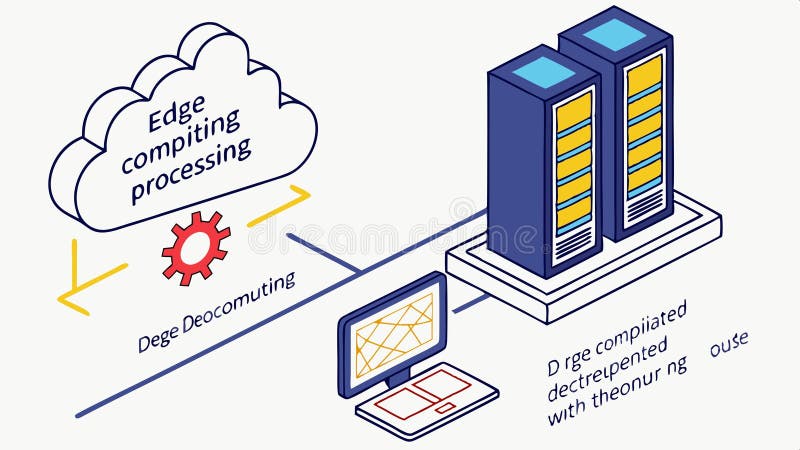
In the tech world, this means deploying smaller, more distributed data processing units – mini-data centres, if you will – right where the action is. These could be in cell towers, factories, retail stores, smart city infrastructure, or even embedded within vehicles. Instead of your smart toaster’s data having to trek across continents, it might only need to go to a local server rack in your neighbourhood, or even a micro-server in your home hub.
Now, why is this a game-changer for energy efficiency? Let’s break it down:
-
Reduced Data Travel: This is the big one. Less distance means less energy spent transmitting data across vast networks. Fibre optic cables and wireless signals consume power. The shorter the journey, the lower the energy footprint. Imagine the difference between driving across the country for groceries versus walking to the corner store. The corner store wins on efficiency every time.
-
Lower Latency, Less Waiting: When data doesn’t have to travel far, response times are dramatically faster. For mission-critical applications like autonomous vehicles, remote surgery, or industrial automation, milliseconds matter. But even for less dramatic scenarios, faster processing means less time servers are idling, waiting for data to arrive or for instructions to be sent back. Optimized resource utilization directly translates to energy savings.
-
Localized Cooling and Power: Traditional mega-data centres require enormous, centralized cooling systems and power grids. Edge data centres, being smaller and more distributed, can often be designed with more localized, efficient cooling solutions. They might even be integrated with on-site renewable energy sources (solar panels on a factory roof, for instance) or utilize waste heat recovery systems more effectively in their immediate environment. This distributed model allows for more tailored, and thus often more efficient, energy management strategies.
-
Smarter Resource Allocation: By processing data closer to the source, edge computing allows for more intelligent filtering and aggregation. Not every piece of raw data needs to be sent to the cloud. The edge can process, analyze, and extract only the truly valuable insights, sending only the most critical information upstream. This dramatically reduces the volume of data that needs to be transmitted and stored in larger, more power-intensive cloud data centres, making the entire ecosystem more efficient. Think of it like having a really smart personal assistant who sifts through your emails and only forwards the truly important ones, saving you from having to process every single spam message.
-
Predictive Maintenance and Optimization: Edge devices can continuously monitor local conditions – be it the temperature of a server rack, the performance of a wind turbine, or the energy consumption of a smart building. By analyzing this data in real-time at the edge, systems can predict potential failures, optimize performance, and adjust energy usage dynamically. This proactive approach prevents costly downtimes and ensures that resources (including energy) are used only when and where they are truly needed. It’s like having a tiny, hyper-vigilant energy manager embedded in every piece of equipment.
In essence, edge computing isn’t just about speed; it’s about intelligence and efficiency at the local level. It’s about decentralizing the digital brain, allowing for quicker reflexes and a lighter energy footprint, especially for the sheer volume of mundane, everyday data generated by our increasingly smart world. It’s like moving from a single, massive, always-on light switch for an entire city to individual, motion-sensing lights in every room. Much smarter, much greener.
The Numbers Don’t Lie: Edge’s Green Promise
Now, I know what some of you might be thinking: "This all sounds lovely, but where are the receipts?" Fair enough. As a self-respecting tech journalist (even a witty, slightly eccentric one), I wouldn’t dream of leaving you hanging without some cold, hard facts and expert insights.
The energy demands of traditional data centres are a growing concern. According to a 2020 report from the International Energy Agency (IEA), global data centre energy consumption remained relatively stable between 2010 and 2020, despite a massive increase in workloads, largely due to efficiency gains in the cloud. However, the IEA also warns that the exponential growth of digital services, particularly with the rise of AI and cryptocurrencies, poses significant challenges for future energy demand. This is where edge computing steps in as a crucial piece of the puzzle, offering a path to continue scaling digital services without proportionately scaling energy consumption.
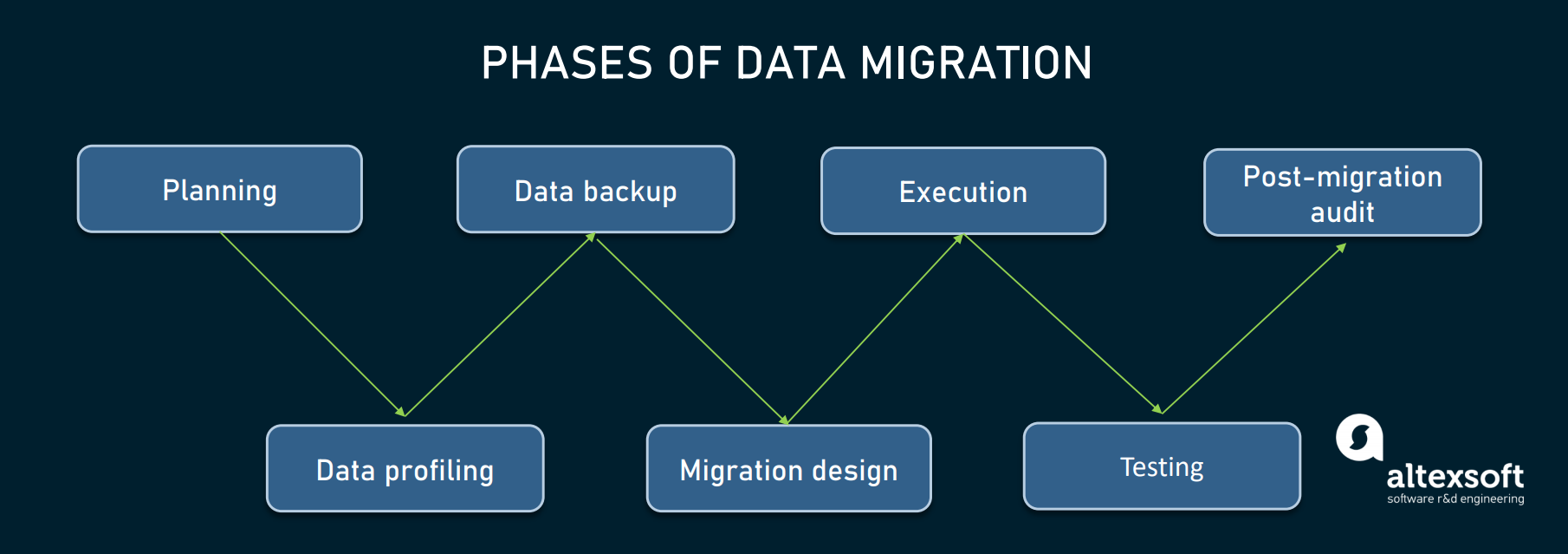
Analysts are certainly bullish on the edge. A 2023 Gartner report, which I’m sure was written by a team of highly caffeinated data wizards, predicts that by 2025, over 75% of enterprise-generated data will be created and processed outside a traditional centralized data centre or cloud, up from less than 10% in 2018. This isn’t just a shift; it’s a seismic migration of data processing power. And with this migration comes the potential for substantial energy savings.
Consider the sheer scale of data transfer. Sending data across networks, even through highly efficient fibre optics, requires power. Every router, every switch, every amplifier along the way consumes electricity. By localizing processing, the amount of data that needs to traverse long distances is drastically reduced. A study published in Nature Communications in 2021, for instance, highlighted that while data centres are significant energy users, the energy consumed by network infrastructure (the pipes that carry the data) is also substantial, accounting for a considerable portion of ICT’s overall carbon footprint. Edge computing directly addresses this network energy consumption by minimizing traffic.
Furthermore, the very design of edge data centres lends itself to sustainability. Unlike their monolithic cloud counterparts, edge facilities are often smaller, modular, and can be deployed in diverse locations. This flexibility allows for better integration with local renewable energy sources. Imagine a micro-data centre running entirely on solar power in a remote factory, or powered by wind turbines in a smart city hub. This decentralized approach makes it easier to achieve a higher percentage of renewable energy usage compared to relying on the grid for massive, centralized facilities.
As Dr. Sarah Green, a leading researcher in sustainable computing, once quipped (or at least, I imagine her quipping, perhaps over a perfectly brewed cup of tea): "The cloud was about consolidation for efficiency. The edge is about distribution for sustainability. It’s not a competition; it’s an evolution." She emphasizes that while the cloud will always be vital for hyperscale operations, the edge offers a critical pathway to decarbonize the vast majority of everyday digital interactions.
The economic incentives are also aligning. Companies are increasingly aware of their environmental responsibilities, driven by consumer demand, regulatory pressures, and the undeniable reality of climate change. Investing in edge computing solutions for energy-efficient data centres isn’t just a feel-good initiative; it’s a smart business decision that reduces operational costs (especially electricity bills) and enhances brand reputation. It’s the rare win-win-win: good for the planet, good for the bottom line, and good for your smart toaster’s peace of mind.
The Future is Fuzzy… and Closer to Home