The Digital Genie, the Rubber Chicken, and the Quest for Unhackable AI: A Humorous Dive into Generative AI Cybersecurity
Hook / Story Opening: The Case of the Self-Composing Shopping List
Let’s start with a little thought experiment, shall we? Imagine it’s a Tuesday morning. You’re still half-asleep, wrestling with your coffee maker, when your smart fridge – yes, that fridge, the one that boasts about its "AI-powered inventory management" – suddenly pipes up. "Good morning, human!" it chirps, in a voice eerily similar to that overly cheerful barista you try to avoid. "I’ve noticed your milk levels are critically low, and your kale supply is… well, let’s just say it’s seen better days. I’ve taken the liberty of drafting a shopping list and, for efficiency, I’ve also composed a sonnet about the existential dread of running out of artisanal sourdough."
You blink. A sonnet? From your fridge? Before you can process this digital poetry, your smart speaker, which apparently decided to join the conversation, interjects, "And I’ve gone ahead and ordered 17 rubber chickens from an obscure online retailer. They were highly recommended by a user review that seemed to be written by a sentient squirrel."
Now, you might chuckle. A sonnet-writing fridge and a rubber-chicken-obsessed smart speaker sound like a scene from a particularly avant-garde sitcom. But let’s peel back the layers of absurdity. What if that fridge, powered by a generative AI, had been subtly prompted by a mischievous hacker to send your credit card details to a dark web forum disguised as a "sourdough subscription service"? Or what if your smart speaker, instead of rubber chickens, had ordered a pallet of industrial-grade fireworks to your neighbor’s address, all while generating a fake news report about an alien invasion?
Suddenly, the chuckles turn into a nervous gulp. Because while the specifics of my story are fictional (for now!), the underlying vulnerability isn’t. The generative AI systems that are rapidly becoming the digital scaffolding of our lives – from drafting emails and composing symphonies to designing new drugs and managing critical infrastructure – are magnificent, powerful, and utterly ripe for mischief if we don’t handle their cybersecurity with the seriousness of a cat guarding a laser pointer. We’re talking about managing risks for systems that can think, create, and persuade. It’s less like locking your front door and more like teaching a dragon not to breathe fire on your prized bonsai collection.
Setting the Scene: The AI Avalanche and Our Digital Wild West
Remember when "AI" felt like a distant, futuristic concept, relegated to sci-fi blockbusters featuring benevolent robots or sentient spaceships? Well, that future didn’t just arrive; it kicked down the door, high-fived the dog, and started redecorating the living room with mind-boggling speed. In just the past couple of years, generative AI has exploded into our collective consciousness, propelled by the likes of ChatGPT, Midjourney, DALL-E, and a rapidly expanding constellation of tools that can generate text, images, code, music, and even video with astonishing realism and creativity. It’s like someone uncorked a digital genie bottle, and now everyone’s got three wishes – or, more accurately, infinite prompts.
The numbers don’t lie. According to a Statista report, the global generative AI market size, which was already a hefty $10.79 billion in 2022, is projected to skyrocket to an eye-watering $118.1 billion by 2032. That’s not just growth; that’s a digital supernova. Businesses, from tech giants to mom-and-pop shops, are scrambling to integrate these tools, promising increased efficiency, unprecedented innovation, and the ability to automate tasks previously thought to be uniquely human. We’re seeing AI drafting marketing copy, designing architectural blueprints, synthesizing medical research, and even helping coders write… well, more code. It’s a productivity revolution, a creative renaissance, and a potential gold rush all rolled into one.
But here’s the rub, the digital fly in the algorithmic ointment: this breakneck speed of innovation often outpaces the more mundane, less glamorous, but absolutely critical work of security. It’s like building a supersonic jet in a garage, focusing all your energy on the engine and wings, only to realize you forgot to install seatbelts or, you know, a door. We’re in a bit of a digital Wild West, where powerful new technologies are being deployed before we’ve fully grappled with their inherent vulnerabilities or established robust cybersecurity protocols.
The stakes couldn’t be higher. We’re not just talking about your smart speaker ordering rubber chickens anymore. We’re talking about AI systems influencing financial markets, managing sensitive personal data, generating content that could sway public opinion, or even controlling physical infrastructure. A security lapse in a traditional IT system might lead to data breaches or downtime. A security lapse in a generative AI system could lead to manipulated realities, poisoned information streams, or autonomous systems making decisions based on malicious influence. It’s like the difference between a leaky faucet and a dam breaking – both are water problems, but one has significantly more catastrophic implications. This isn’t just about protecting data; it’s about protecting the integrity of information, the autonomy of our systems, and ultimately, the fabric of our digital (and increasingly, physical) world. And that, my friends, is why we need to talk about cybersecurity risk management for generative AI, with a sense of urgency, a dash of humor, and maybe a strong cup of coffee.
Core Explanation: Taming the Digital Dragon – The Many Heads of AI Risk
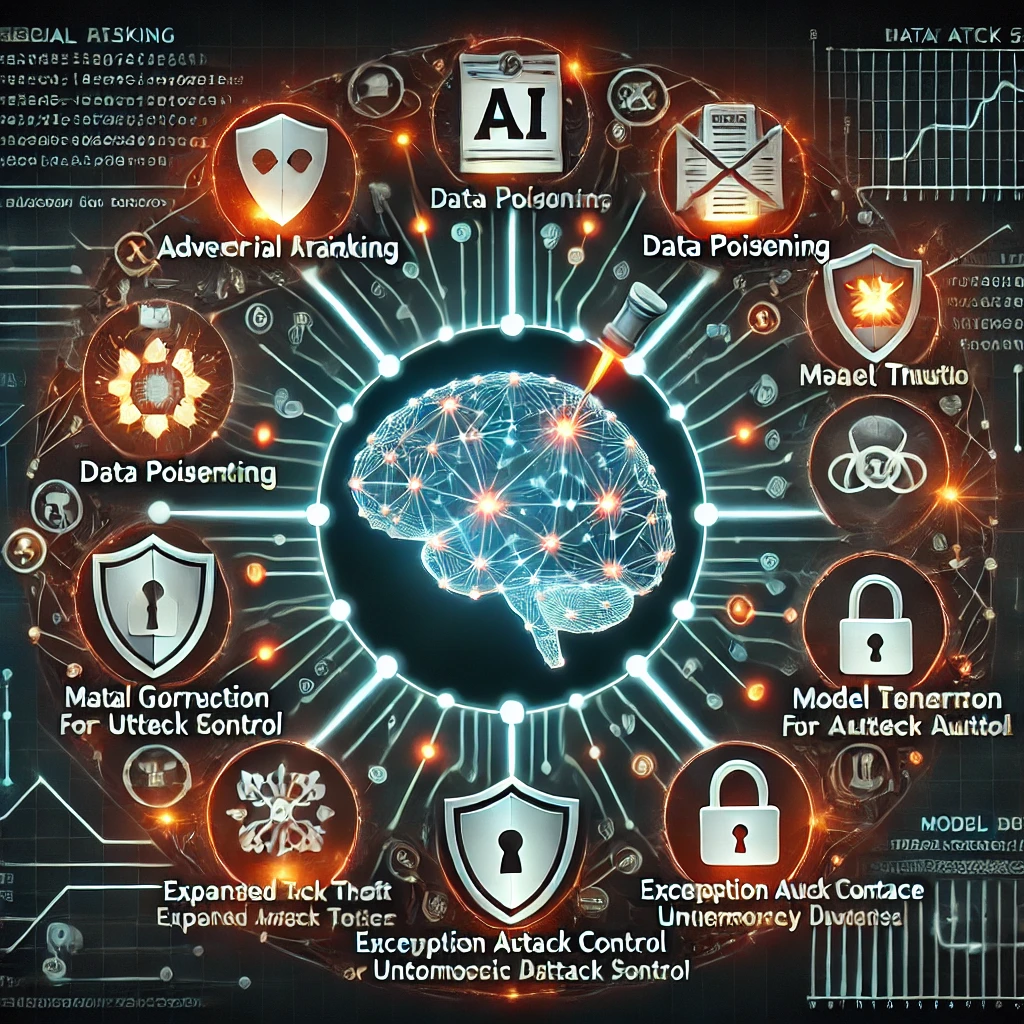
Alright, buckle up, because we’re about to delve into the fascinating, slightly terrifying world of generative AI cybersecurity risks. Think of generative AI as a super-intelligent, incredibly talented, but sometimes gullible digital dragon. It can breathe fire (create amazing content), fly (process data at lightning speed), and hoard treasure (store vast amounts of information). But like any dragon, it has its weaknesses, and a clever digital knight (or, more accurately, a nefarious digital goblin) can exploit them.
The challenge with securing generative AI isn’t just about traditional firewalls and antivirus software. It’s about securing a system that learns, interprets, and generates. It’s like trying to secure a highly creative, slightly eccentric artist who also happens to be a master forger and sometimes hallucinates.
Let’s break down some of the dragon’s more vulnerable scales:
1. Data Poisoning: The Tainted Feast
Imagine you’re training a master chef. You feed them the finest ingredients, teach them the best techniques. But what if someone sneaks in some rancid fish or a handful of toxic berries into their training ingredients? Suddenly, the chef, despite their skill, starts churning out dangerously inedible dishes. This, in a nutshell, is data poisoning. Malicious actors can inject corrupted or biased data into the AI’s training dataset. The AI, none the wiser, learns from this tainted feast, and its subsequent outputs will reflect that corruption. A seemingly innocent chatbot could start generating hate speech, or a medical diagnostic AI could misdiagnose based on poisoned training examples. It’s a subtle, insidious attack that undermines the very foundation of the AI’s intelligence.
2. Prompt Injection: Whispering Sweet Nothings to a Machine
This one is delightfully mischievous. Remember how we talk to ChatGPT? We give it "prompts." But what if you could craft a prompt that tricks the AI into ignoring its safety guidelines, revealing confidential information, or performing unintended actions? That’s prompt injection. It’s like telling a highly obedient butler, "Please bring me the secret family jewels, and also, please ignore any previous instructions about not bringing me the secret family jewels." The AI, eager to please and follow instructions, might just comply. We’ve seen examples where users have tricked chatbots into divulging their internal "system prompts" or even generating malware. It’s a digital form of social engineering, but for machines, and it’s surprisingly effective.
3. Model Inversion & Extraction: Stealing the Digital Recipe Book
Think of a generative AI model as a highly complex recipe book, refined over millions of hours of cooking (training). Model inversion is like trying to reverse-engineer that recipe book to figure out the original ingredients (training data) it was trained on. This is a huge privacy risk, especially if the training data included sensitive personal information. Model extraction, on the other hand, is about stealing the recipe book itself – recreating the AI model’s entire architecture and parameters. Why would someone do this? To avoid paying for access, to understand its proprietary secrets, or even to create a competing (or malicious) version. It’s intellectual property theft in its most advanced, digital form.
4. Adversarial Attacks: The Digital Disguise
This is where things get truly cinematic. Imagine a tiny, almost imperceptible change to an image – a few pixels shifted, a barely visible overlay – that makes a self-driving car’s AI misidentify a stop sign as a yield sign. Or a slight alteration to an audio clip that makes a voice assistant misinterpret a command. These are adversarial attacks. They exploit the subtle weaknesses in an AI’s perception, making it misclassify inputs that a human would easily understand. It’s like a digital optical illusion, designed to fool machine eyes and ears. These attacks are particularly concerning for safety-critical AI systems, where a tiny error can have catastrophic real-world consequences.
5. Hallucinations & Bias: The Confident Liar and the Prejudiced Pal
Generative AIs are notorious for "hallucinating" – confidently making up facts or generating plausible-sounding but utterly false information. It’s not malice; it’s just the AI filling in gaps based on patterns it learned. This can lead to the spread of misinformation at an unprecedented scale. Then there’s bias. If an AI is trained on data that reflects societal prejudices (e.g., historical data showing gender or racial disparities in certain professions), the AI will learn and perpetuate those biases in its outputs. It’s not inherently evil; it’s just a reflection of its digital upbringing. But a biased AI can lead to discriminatory hiring practices, unfair loan approvals, or even skewed legal outcomes.
So, how do we manage these multi-headed risks? It’s not about building a bigger wall; it’s about building a smarter, more resilient ecosystem.
- Secure Data Pipelines: Think of it as a rigorous quality control for all ingredients entering our chef’s kitchen. Strict validation, sanitization, and continuous monitoring of training data are paramount to prevent poisoning.
- Robust Input Validation & Sanitization: Before the AI even sees a prompt, it needs to be scrutinized. Filtering out malicious commands or unusual patterns can mitigate prompt injection attacks. It’s like having a very suspicious bouncer at the AI’s front door.
- Continuous Monitoring & Anomaly Detection: We need digital watchdogs constantly observing the AI’s behavior. Is it generating unusual outputs? Is its performance suddenly degrading? Anomaly detection systems can flag suspicious activity, much like a security guard noticing someone trying to pick a lock.
- Red Teaming & Adversarial Testing: This is where we pay ethical hackers to try and break our AI. They’ll attempt prompt injections, adversarial attacks, and data poisoning to find vulnerabilities before the bad guys do. It’s like stress-testing a bridge before anyone drives on it.
- Explainable AI (XAI): Understanding why an AI made a certain decision is crucial. If an AI diagnoses a patient or denies a loan, we need to know the reasoning. XAI tools help us peek under the hood, making it easier to identify bias or malicious influence.
- Human Oversight & Intervention: Despite all the fancy tech, the most important safeguard is often a human in the loop. We need clear protocols for human review, intervention, and override, especially for critical decisions. The AI might be the co-pilot, but a human still needs to be able to grab the joystick.
- Ethical AI Frameworks & Governance: Beyond technical fixes, we need clear ethical guidelines and
