Does the Echo Chamber of the Ingraham Angle Silence More Than It Amplifies?
Take a moment. Think about the last time you truly engaged with an idea that made you uncomfortable, that challenged your deepest convictions, that forced you to genuinely rethink something you believed to be absolute truth. Was it yesterday? Last week? Or has it been so long that the very notion feels alien, perhaps even threatening? In a world awash with information, we often find ourselves retreating into familiar corners, seeking out voices that echo our own. This isn’t just a passive preference; it’s an active, often unconscious, curation of our reality. And few figures exemplify the architecture of this curated reality, particularly for a significant segment of American conservatives, quite like Laura Ingraham. But when the "Ingraham Angle" becomes the dominant lens through which millions view the world, what does it truly show us, and perhaps more importantly, what does it obscure, distort, or even silence entirely?
Ingraham isn’t just another voice in the vast media landscape; she’s a formidable force, a seasoned combatant in the culture wars, and a high-profile architect of conservative discourse. For decades, whether through the airwaves of her syndicated radio show, "The Laura Ingraham Show," or the powerful primetime slot of "The Ingraham Angle" on Fox News, she has carved out an unmistakable niche. She’s built a career on a foundation of staunch conservative principles, a populist critique of what she perceives as liberal overreach, and an unyielding defense of traditional American values. She’s a lawyer by training, a former Supreme Court clerk for Justice Clarence Thomas, and a speechwriter in the Reagan administration. This background doesn’t just lend her credibility; it informs her highly articulate, often combative, rhetorical style. She doesn’t just report the news; she interprets it, filters it, and presents it with an unwavering ideological slant, leaving little room for ambiguity or dissenting opinion. Her approach isn’t about nuanced debate; it’s about winning the argument, often through sharp critiques, rhetorical flourish, and a direct appeal to the frustrations and anxieties of her audience.
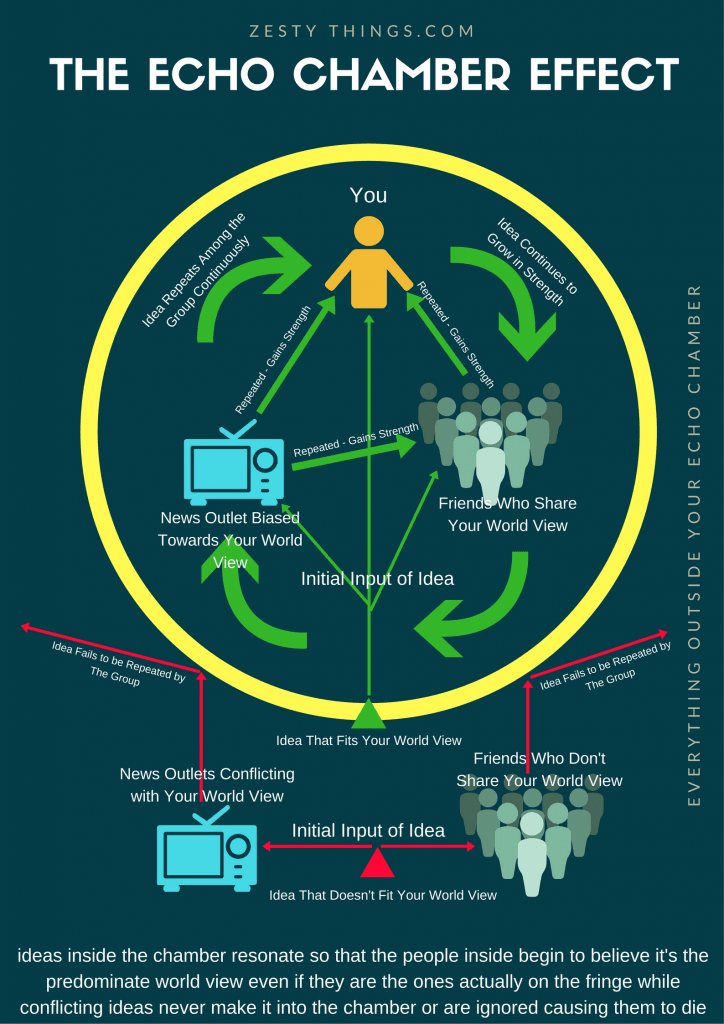
So, how does this "angle" work, and what makes it such a potent force in today’s polarized media environment? At its core, "The Ingraham Angle" operates less like a traditional news program and more like a carefully constructed echo chamber. An echo chamber, as we know, isn’t just a place where you hear your own voice bounce back; it’s an environment where beliefs are amplified and reinforced, where dissenting opinions are either absent or presented in a way that confirms existing biases. Ingraham excels at this. She frames issues in ways that resonate deeply with her conservative base, often simplifying complex problems into clear-cut narratives of good versus evil, patriotism versus perceived subversion.
Think about her common targets: "liberal elites," "mainstream media," "globalists," "socialists," and those she deems to be undermining American sovereignty or traditional family values. She uses charged language, not just to inform, but to evoke strong emotional responses. Her rhetorical questions aren’t designed to invite genuine inquiry but to guide the audience to a predetermined conclusion. When she asks, "Are we really going to let critical race theory infect our children’s schools?" she isn’t looking for a reasoned discussion on educational philosophy; she’s activating a specific fear and rallying her viewers to reject a concept they may only understand through her particular framing.
This isn’t accidental. It’s a deliberate strategy that plays into well-understood psychological tendencies. People prefer information that confirms what they already believe – it’s called confirmation bias. And in an age of information overload, having a trusted voice that consistently validates your worldview can be incredibly comforting, even addictive. Ingraham, and indeed Fox News as a broader platform, provides this comfort. They curate a world where conservative viewpoints are not just valid but righteous, where challenges to those views are not just wrong but malevolent. This selective framing, this consistent affirmation, builds a powerful sense of community among her viewers, but it also erects formidable walls against any information that might contradict their carefully constructed reality.
But what happens when millions of people primarily consume news and analysis through such a tightly controlled lens? What are the real-world consequences when our news only confirms what we already believe? The impact, we’re learning, is profound and often deeply damaging to the fabric of a democratic society.
First, there’s the undeniable acceleration of political polarization. Ingraham’s rhetoric, like that of many partisan media figures, doesn’t seek common ground; it defines and entrenches battle lines. During the Trump administration, her show became a reliable amplifier of the president’s agenda and a fierce defender against any criticism. This wasn’t about fostering national unity or finding bipartisan solutions; it was about mobilizing a base, demonizing opponents, and framing every political disagreement as an existential struggle. When a significant portion of the electorate is consistently told that the other side is not just mistaken but actively dangerous, compromise becomes impossible. How can you negotiate with someone you’re taught to believe is an enemy? This contributes directly to legislative gridlock, governmental dysfunction, and a pervasive sense of animosity across the political spectrum, making it harder for our nation to address pressing challenges, from climate change to economic inequality.
Then, consider the erosion of trust – not just in traditional institutions, but in the very concept of objective truth. When figures like Ingraham relentlessly critique the "mainstream media" as biased, dishonest, or even "fake news," they sow deep seeds of doubt. While media criticism is vital, this kind of blanket dismissal doesn’t encourage critical thinking; it encourages a rejection of any information source that doesn’t align with the echo chamber. We saw this starkly during the COVID-19 pandemic, where scientific consensus was often dismissed as a liberal conspiracy, or during the 2020 election, where baseless claims of widespread fraud were amplified, leading to a significant portion of the population questioning legitimate democratic processes. When people can’t agree on basic facts – about a virus, an election, or the economy – how can they possibly engage in productive civic discourse or make informed decisions as citizens? This constant questioning of verifiable facts creates fertile ground for misinformation and disinformation, making it incredibly difficult to distinguish truth from partisan narrative.
Ultimately, this leads to a dangerous decline in social cohesion. A healthy society needs shared narratives, a common understanding of reality, and a basic level of trust to function. When media figures actively work to fragment that understanding, to create separate realities for different groups, the bonds that hold a society together begin to fray. People start to view their fellow citizens, those who consume different media, not as neighbors with different opinions, but as fundamentally misguided, perhaps even morally corrupt. This isn’t just theoretical; we see it play out in families divided by politics, in communities struggling with local issues, and in the heightened rhetoric that often spills over into real-world aggression.
So, if the "Ingraham Angle" and similar echo chambers are so detrimental, what’s the way out? How do we move beyond simply critiquing the problem to actively cultivating solutions? It’s a complex challenge, one that demands both individual responsibility and a broader societal shift.
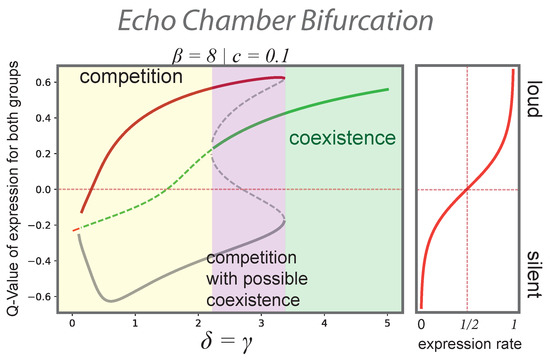
First, we need to champion media literacy. This isn’t just about teaching kids to spot fake news; it’s about empowering everyone to critically evaluate information sources, understand journalistic practices (and their limitations), and recognize their own biases. We need to encourage people to actively seek out diverse viewpoints, not just those that confirm their existing beliefs. This means consciously stepping outside the comfort zone of the echo chamber, reading articles from publications with different ideological leanings, and listening to voices that articulate perspectives you might instinctively disagree with. It’s about understanding that a balanced media diet is just as important as a balanced food diet for a healthy mind and a healthy democracy.
We also need to foster intellectual humility. It’s the willingness to admit, "I might be wrong." In a media landscape that often rewards certainty and dismisses doubt, cultivating this humility is revolutionary. It means approaching discussions with an open mind, listening to understand rather than to rebut, and recognizing that complex issues rarely have simple, black-and-white answers. Can we, as individuals and as a society, learn to value genuine inquiry over ideological purity? Can we prioritize understanding over winning?
Furthermore, the responsibility doesn’t solely lie with the audience. There’s a critical role for journalism itself. While opinion journalism has its place, there’s an urgent need for media outlets that prioritize fact-finding, nuanced reporting, and a commitment to civic discourse over partisan point-scoring. This means investing in investigative journalism, providing context, and actively working to bridge divides rather than deepen them. It means distinguishing clearly between reporting and commentary, and holding those in power – regardless of their political stripe – accountable.
Looking ahead, the risks of unchecked partisan media are stark. If we continue down this path, we risk an even more deeply fractured society, one where consensus on fundamental issues becomes impossible. We face the prospect of increased political radicalization, where distrust festers, and the inability to address national challenges intensifies. What happens when a nation can’t agree on the reality of a crisis, let alone the solutions? What happens when our leaders spend more time battling each other through media proxies than working together for the common good?
This isn’t just about Laura Ingraham; it’s about the broader ecosystem she represents. It’s about the choices we make as consumers of information, and the kind of society we’re actively helping to build or dismantle. So, as you reflect on the "Ingraham Angle" and its undeniable influence, ask yourself: Am I allowing my own reality to be solely defined by an angled lens? Am I contributing to an echo chamber that silences more than it amplifies? The