Are We Collecting Memories, or Merely Monetizing Nostalgia, with Derek Jeter’s Rookie Cards?

Imagine a small rectangle of cardboard, barely larger than your palm, bearing the fresh-faced image of a young man in a baseball uniform. Now, imagine that same unassuming piece of paper commanding the price of a luxury car, or even a modest home. Is this a testament to an enduring legacy, a shrewd investment, or something far more unsettling about our collective pursuit of value? This isn’t hyperbole; this is the reality of the Derek Jeter rookie card market, a phenomenon that doesn’t just reflect the enduring appeal of a baseball icon, but acts as a potent mirror to our own shifting economic anxieties, our insatiable hunger for tangible assets, and the increasingly blurry line between passion and profit.
Derek Jeter, "The Captain," isn’t just a name whispered in baseball circles; he’s an institution. For two decades, he stood as the unwavering pillar of the New York Yankees, a symbol of consistency, class, and clutch performance. Five World Series rings, a Hall of Fame induction on the first ballot, and a reputation for humility in the glaring spotlight of New York City—his career wasn’t just good; it was a masterclass in sustained excellence. He played the game with an almost anachronistic grace, seemingly untouched by the scandals and excesses that often plague professional sports. He was, and remains, an unblemished hero, a figure whose very name evokes a golden era of baseball, a time when legends felt a little more tangible, a little less manufactured. This is the bedrock upon which the soaring value of his rookie cards rests: an unassailable legacy, a cultural touchstone that transcends mere statistics.
But what is a rookie card, really? For generations, it has been the holy grail of sports card collecting, a physical timestamp marking the genesis of a professional career. It’s the first glimpse of greatness, the initial spark before the blaze. Historically, collecting these cards was a simple, innocent pursuit. Kids would tear open wax packs, hoping for their favorite player, trading duplicates with friends, often storing them in shoeboxes or rubber-banded stacks. The rookie card was a badge of honor, a small piece of history you could hold. Yet, the hobby, like so many aspects of our lives, didn’t stay confined to dusty shoeboxes. It evolved, mutated, and, some might argue, became something entirely different. The 1980s and early 90s, often dubbed the "Junk Wax Era," saw an explosion in production, flooding the market with cards and inadvertently setting the stage for a future where true scarcity would become the ultimate arbiter of value. Jeter emerged just as the industry was beginning to grapple with this overproduction, making his earliest, scarcer issues even more significant.
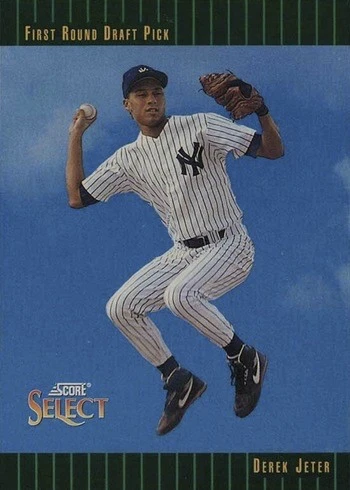
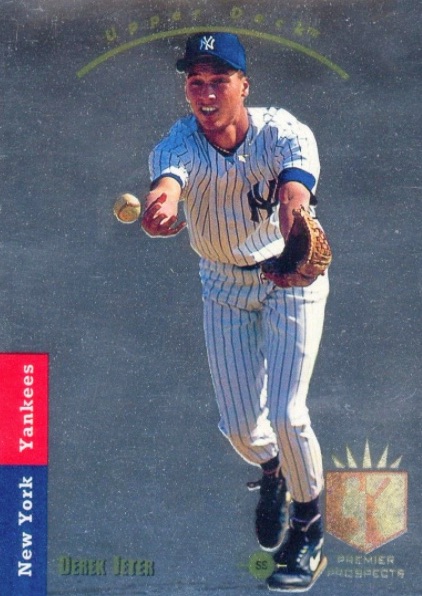
When we talk about "the" Derek Jeter rookie card, it’s crucial to understand that we aren’t talking about a singular entity. It’s a portfolio, a collection of cardboard assets, each with its own story, its own market trajectory. The most coveted, the undisputed king, is often the 1993 SP Derek Jeter #279. Why this one? Because it was short-printed, featuring a distinctive foil finish that was notoriously prone to flaking and damage, making high-grade examples incredibly rare. Then there’s the 1992 Bowman #532, his very first card, albeit a minor league issue. It’s raw, unpolished, capturing him before the pinstripes. Other significant contenders include the 1993 Topps #98, the 1993 Upper Deck #449, and the 1993 Topps Gold #98, each carrying different levels of scarcity and market appeal. Do we truly understand these distinctions, the nuances of print runs and condition sensitivities, or are we simply chasing the name "Jeter," hoping to catch a piece of the magic, or perhaps, a piece of the profit? This varied landscape of Jeter rookies isn’t just a collector’s detail; it’s a microcosm of the market’s complexity, where perceived rarity and aesthetic appeal collide with historical significance to dictate astronomical values.
What transforms a piece of cardboard, even one featuring a legend, into an object worth hundreds of thousands, sometimes millions, of dollars? The answer lies in a powerful triumvirate: scarcity, condition, and the rigorous, often unforgiving, world of professional grading. Companies like PSA (Professional Sports Authenticator), BGS (Beckett Grading Services), and SGC (Sportscard Guaranty Corporation) act as the arbiters of this value. They meticulously inspect every corner, every edge, every surface, assigning a numerical grade from 1 to 10. A "PSA 10," or "Gem Mint," isn’t just a perfect card; it’s a declaration of near-flawless preservation, a rare specimen that stands above the vast majority. A card that might fetch a few thousand dollars as a "raw" ungraded item can suddenly command ten or even a hundred times that amount if it earns a perfect 10.
Consider the analogy of a rough diamond. On its own, it holds inherent value, but it’s the expert cutting, polishing, and certification that transforms it into a dazzling, investment-grade gem. Similarly, these grading services have professionalized the hobby, creating a standardized language of condition that allows collectors and investors worldwide to trade with confidence. They publish "pop reports," detailing how many examples of each card exist at each grade, revealing the true scarcity of those elusive Gem Mint copies. But is this system truly about preservation, about celebrating the historical artifact, or has it inadvertently created an artificial scarcity, an exclusive club where only the perfectly preserved—and perfectly priced—cards are deemed worthy? This process, while bringing transparency, also introduces a layer of gatekeeping, pushing the most desirable items further out of reach for the average enthusiast.
The market for Derek Jeter rookie cards, and indeed the broader sports card market, isn’t just about nostalgia; it’s a dynamic, often volatile, economic force. It’s a mirror reflecting broader societal trends, from the commodification of memory to the relentless pursuit of alternative asset classes. Nostalgia, once a warm, fuzzy feeling, has become a powerful currency. For many, a Jeter card isn’t just cardboard; it’s a tangible link to childhood, to simpler times, to shared family moments watching the Yankees. This emotional resonance translates directly into market demand, especially as those who grew up watching Jeter reach their peak earning years.
But the narrative quickly shifts from sentimental to speculative. Over the last decade, and particularly during the COVID-19 pandemic, the sports card market experienced an unprecedented boom. Confined at home, with disposable income and a craving for tangible assets beyond traditional stocks and bonds, people poured into collectibles. What started as a hobby for some quickly became an investment vehicle for others. High-profile sales, fueled by social media hype and online auction houses like eBay, PWCC, and Goldin Auctions, pushed prices into the stratosphere. A Derek Jeter 1993 SP PSA 10, once a five-figure card, soared well into six figures, even touching seven figures in rare instances. This isn’t just collecting; it’s financialization.
Are we witnessing a sustainable market, or are we simply riding the wave of another speculative bubble, destined to burst? The card market, much like crypto or NFTs, is susceptible to irrational exuberance. When prices are driven by the "greater fool theory"—the belief that someone else will pay even more—rather than intrinsic value, the risks are immense. We saw a correction in 2022-2023, with prices for many cards, including some Jeter rookies, pulling back from their pandemic highs. This volatility forces us to confront uncomfortable questions about the very nature of value itself. Is a card "worth" what someone is willing to pay today, or does its true value lie in its historical significance, independent of market whims?
This economic shift has profound social implications, creating a fascinating tension between democratization and exclusion. On one hand, online marketplaces have globalized the hobby, making it easier than ever to buy, sell, and learn about cards. Anyone with an internet connection can participate. Yet, this very accessibility, coupled with skyrocketing prices, has also created a significant barrier to entry for the traditional collector—the kid with a shoebox, the casual fan. When a single rookie card can cost more than a year’s salary, the hobby transforms from an inclusive pastime into an exclusive playground for the wealthy.

Does the relentless pursuit of profit erode the very joy that drew people to the hobby in the first place? When every card is viewed through the lens of its potential resale value, does it diminish its intrinsic appeal as a piece of history, a work of art, or a symbol of fandom? This shift also opens the door to darker elements: sophisticated counterfeiting operations, market manipulation schemes, and predatory practices that target unsuspecting collectors.